
What Are AI Voice Models? How to Pick and Use One in 5 Simple Steps

Published: · Updated:
Looking for a specific voice? The Voicestars AI voice catalogue is searchable by artist or character name.
AI voice models are the trained voices behind AI covers, character memes and custom narrators. Picking the right one matters more than any setting.
This guide explains what a voice model is and gives five steps to pick one, use it and keep the result clean and labelled.
We reviewed the Voicestars voice catalogue, voice-cloning page and pricing, and the Tennessee ELVIS Act announcement on 11 November 2026.
Try a voice model now
Pick a model, drop a dry vocal or type text, then continue on the voice page.
Quick answer
An AI voice model is a trained copy of one voice that converts recordings or reads text in that voice. Pick a catalogue model for covers and fan clips or train your own from about 10 minutes of audio, choose one whose range matches your input, use a dry recording, compare with the demo and label the result as AI.
- 01 Input Dry vocal or typed text
- 02 Model Trained voice
- 03 Output Your performance in that voice
Original editorial workflow diagram; not a product screenshot or test result.
Catalogue, your own or licensed?
Choose by use and rights.
| Option | What you get | Best for | Check |
|---|---|---|---|
| Use a catalogue model | Ready-made artist, character and singer voices | Covers, memes, fan clips | Label imitations as AI. |
| Train your own model | A model of your voice from about 10 minutes of audio | Your voice singing or speaking anything | Premium or Expert plan on Voicestars. |
| Commission a licensed voice | A model with the speaker’s consent | Commercial projects | Written permission. |
Voicestars hosts a catalogue of artist, character and singer models and trains custom models on Premium and Expert plans.
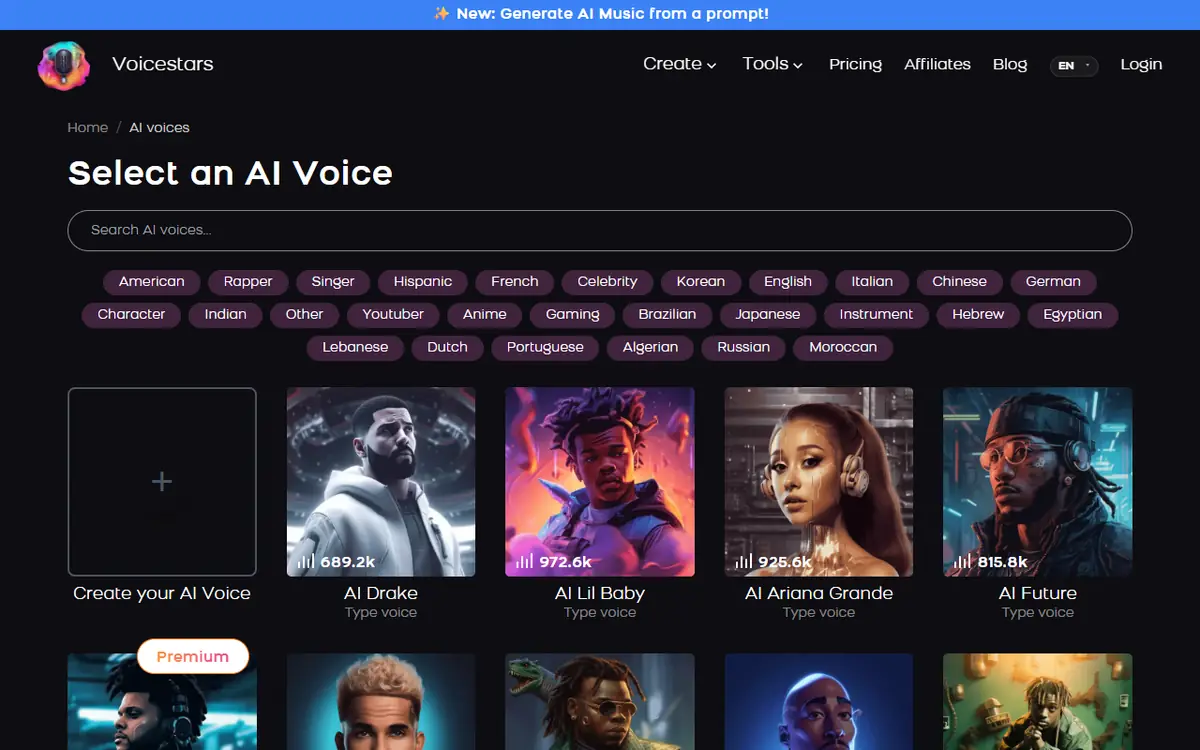
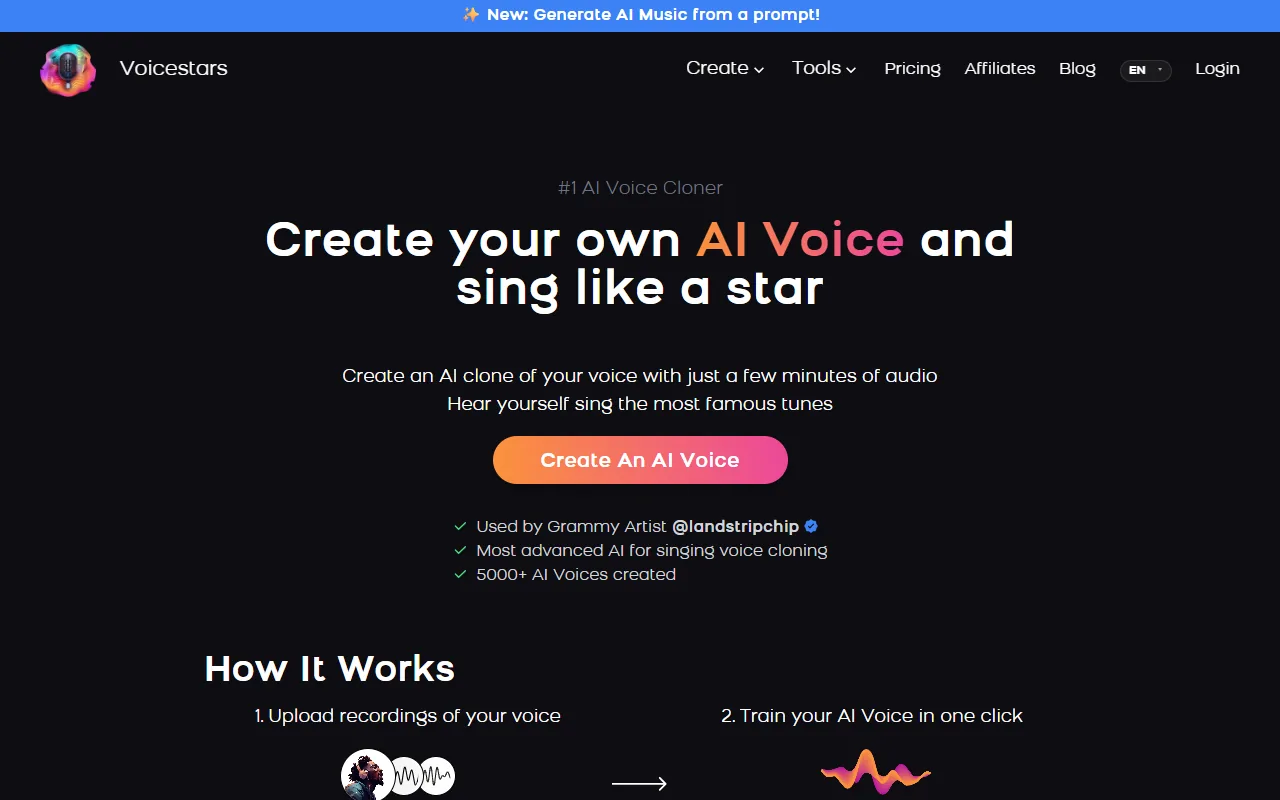
Sources: Voicestars AI voice catalogue · Voicestars: Create an AI Voice · Voicestars pricing
Pick and use a voice model in 5 steps
Step 2 avoids most bad results.
- Define the use: a cover, a meme, a voiceover or your own voice. This decides between a catalogue model and a trained one.
- Audition models by demo, and pick one whose range matches your input; a singer model on a deep voice will crack.
- Prepare clean input: a dry vocal, or typed text for models that support text to speech.
- Convert and compare with the demo; regenerate weak lines or fix the input.
- Label the output as AI and keep imitations of real people non-commercial unless you have permission.
Example: matching a model to your voice
An original check before converting.
Your range: low baritone
Model: high pop soprano → likely to crack
Better: a baritone or tenor model, or transpose +5 semitones
What to check
- Ranges are compared first.
- The demo is checked.
- Transpose only if needed.
What a voice model learns
A model learns the timbre of the voice it was trained on: its colour, breathiness and resonance.
It does not learn your song: timing, melody and emotion come from the performance you feed it.
That is why clean input and a matching range matter more than which model is “best”.
To train your own model, follow our guide to making an AI voice of yourself.
Fix common voice model problems
| Symptom | Likely cause | What to do |
|---|---|---|
| Voice cracks | Range mismatch | Pick a model closer to your range or transpose. |
| Metallic sound | Reverb or noise in input | Use a dry, clean recording. |
| Sounds like you | Weak model | Try another model of the same voice. |
Use a voice model on Voicestars
Search the catalogue, or train your own voice.
- Search the catalogue by artist or character.
- Upload a dry vocal or type text on the voice page.
- Or train your own model from about 10 minutes of audio.
Then use it on a song with our AI song cover guide.
What this guide does and does not establish
Facts come from the public sources listed below on the verification date; plans, features and rankings change.
We did not run a blind listening test or measure quality across tools.
Evidence, method and responsibility
Research and interface checks: 11 November 2026. Maintained by Voicestars Editorial under the Nolan Vale pen name. This role is not a claim of an independent qualification or an endorsement by the cited organizations.
- The Voicestars voice catalogue, voice-cloning page and pricing, and the Tennessee ELVIS Act announcement reviewed 11 November 2026; screenshots captured that day.
- Keyword research: DataForSEO Google keyword suggestions, United States, English, collected 11 November 2026 (ai voice models, voice models ai, best ai voice models).
- Examples are original. No generated audio is presented as a test.
- Voicestars publishes this guide and offers the AI voice tools mentioned; it has a commercial interest in this topic.
We distinguish provider documentation, observed interface behavior and proposed exercises. Screenshots are our actual browser captures; a screenshot of a form does not prove audio quality. No invented measurements, reviewer credentials or user ratings are used.
Report a correction to Voicestars Editorial with the page, date, a short reproducible example and the observed result. Avoid sending private recordings. See our editorial policy.
Frequently asked questions
What is an AI voice model?
A machine-learning model trained on recordings of one voice, so it can convert another performance or text into that voice.
Where can I find AI voice models?
Voice platforms host catalogues; Voicestars lists 2,000+ voices on its pricing page, searchable by name.
Can I make a voice model of myself?
Yes. Voicestars trains one from about 10 minutes of clean audio, usually in one to two hours.
Are voice models legal?
Using your own voice or a licensed one is fine; imitating real people raises likeness issues, protected in some places such as Tennessee. This is not legal advice.
Why does a model sound bad on my recording?
Noisy input, reverb or a range mismatch are the usual causes.
Sources and verification date
Consulted 11 November 2026. Provider features, plans and laws can change. Product documentation is distinguished from the original exercises proposed in this guide.
For the law protecting voices in Tennessee, see the ELVIS Act announcement.


