
How to make an AI song cover with a voice you can use
Published: · Updated:
Start with a performance and a voice you are authorized to use.
Separate vocal preparation, voice conversion and final mixing.
Follow the real Voicestars catalogue and personal-voice setup screens.
Judge pitch, consonants and timing before considering a release.
Start your AI cover now
Pick a singer and drop your song or acapella. Voicestars separates the vocals for you.
Quick answer
To make an AI song cover, prepare a clear vocal performance, choose an authorized target voice, convert the vocal and mix it with the backing. Voice conversion changes vocal character; it does not reliably repair melody, timing or missing words. A catalogue listing is not proof of a performer’s permission or endorsement.
Choose the workflow
Match the input, output and constraints to your project. This table compares documented workflows; it is not a measured audio-quality ranking.
| Starting point | Next operation | Critical check |
|---|---|---|
| Your own dry vocal + backing | Voice conversion, then mix | Permission for the target voice and the music |
| A mixed recording you may process | Separate a vocal before conversion | Bleed and reverb can carry into conversion |
| Lyrics with no performance | Generate or record a song first | A cover converter is not automatically a lyrics-to-song tool |
| Your own reusable vocal identity | Personal voice training | Sufficient clean recordings and a clear data-use decision |
Evidence: Voicestars personal voice training · Voicestars voice catalogue · YouTube: likeness detection update, 21 April 2026 · Voicestars Terms and Conditions
The seven-step process
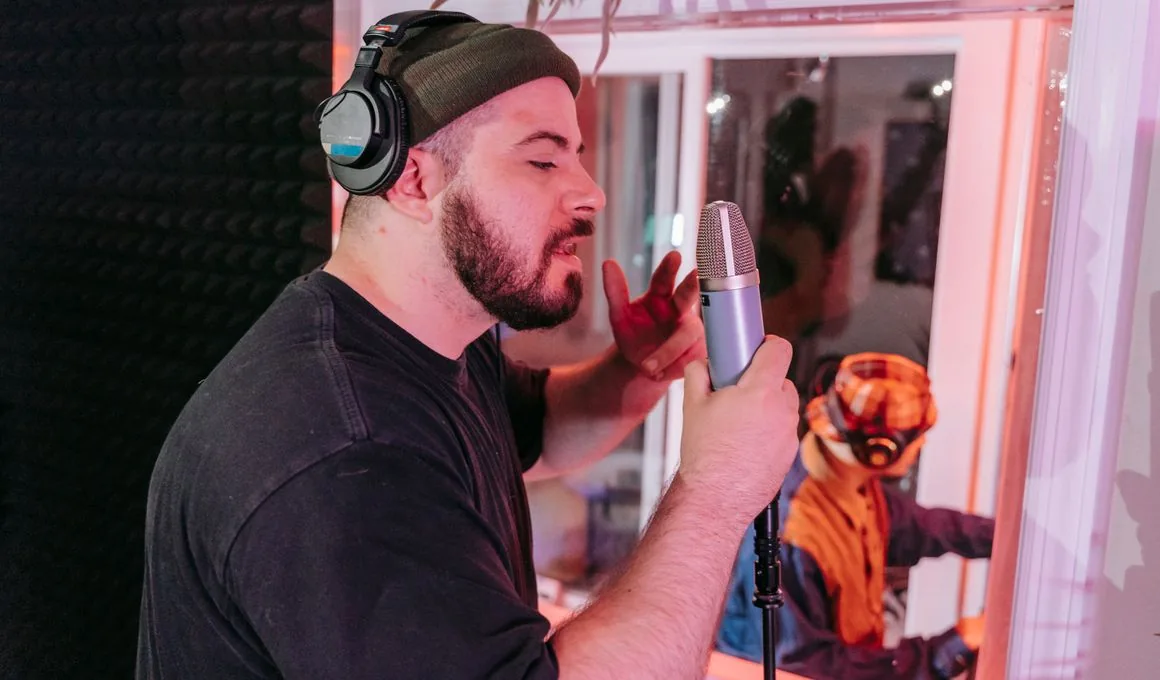
- Choose a song and performance you own or have permission to use. Record what permission covers the composition, recording, target voice and release.
- Prepare a dry lead vocal. If you only have an authorized mix, separate it and listen for backing bleed before converting.
- Check the melody and timing against the backing. Fix an obvious wrong note or misplaced entrance in the performance before relying on conversion.
- Open the Voicestars voice catalogue or your own trained voice. Read the model information and verify permission separately from its name or popularity.
- Use a short representative vocal phrase for the first conversion. Keep the original and note any visible settings, credit charge and selected voice.
- Compare the converted vocal on exposed words, high notes, held vowels and breaths. Change one variable at a time; do not select a result solely because it is louder.
- Place the converted vocal against the authorized backing, align it, balance levels and export a review mix. Check rights and platform disclosure before public release.
An original two-line phrase for a controlled vocal test
Sing these original words in a comfortable range, once with a short delivery and once with a sustained final vowel. This is a proposed recording exercise, not a Voicestars-generated sample. Use the same melody and backing for both versions to make the comparison useful.
Morning light across the floor,
I leave the quiet at the door.

Version A: short final note
Version B: sustained final vowel
Log: source take, authorized voice, settings shown, timestamped defects
What to check
- Are “light”, “floor” and “door” still intelligible?
- Does the sustained vowel wobble more than in the input?
- Does the converted phrase begin on the same beat?
- Can you identify the chosen version without relying on a louder playback level?
Voicestars tutorial: select a voice or prepare your own
The catalogue is a navigation tool, not a clearance database. For a reusable reference workflow, start with your own voice or documented permission.
- Open Select an AI Voice and review the search and category controls. Do not treat a model name as proof of endorsement.
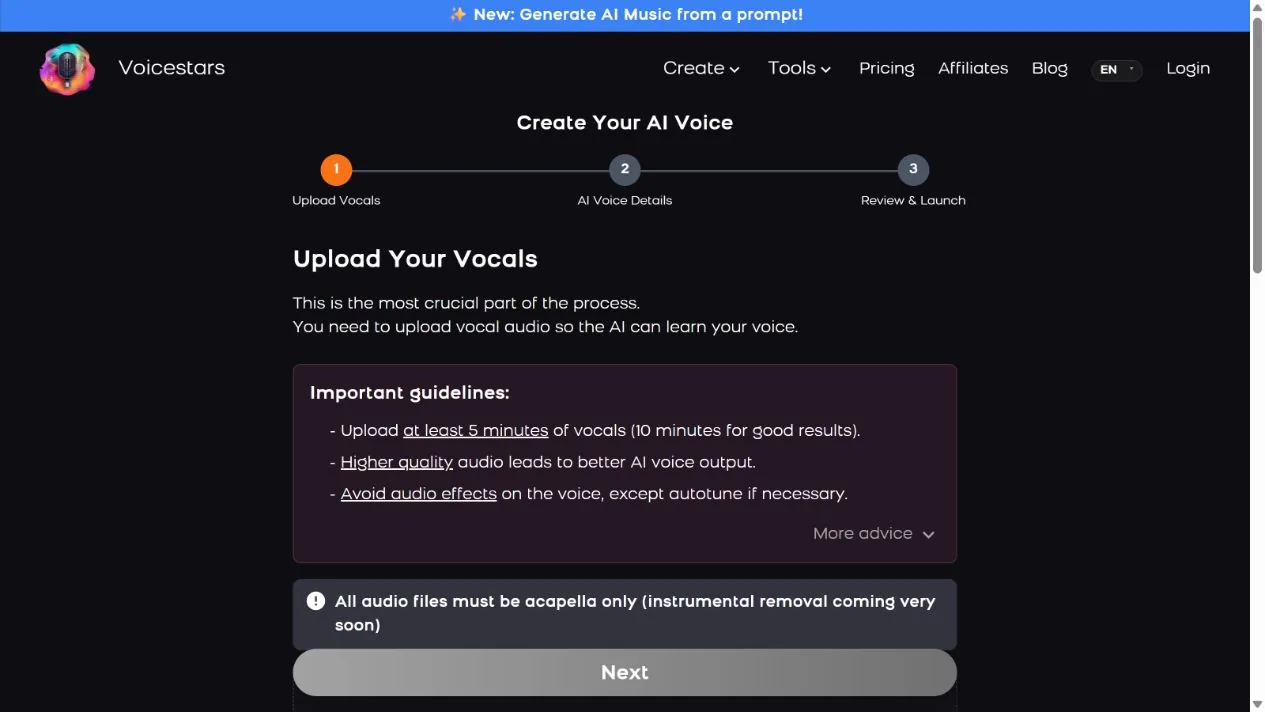
- For your own model, follow Create your AI Voice. The actual form separates Upload Vocals, AI Voice Details and Review & Launch.
- Prepare the requested clean acapella recordings. The observed form asks for at least five minutes and recommends ten; do not upload someone else’s identity without authorization.
- After a model is available, follow its conversion screen with an authorized short vocal. Review account, credit and terms requirements, then use the listening checks before mixing.
Understand what voice conversion actually changes
An AI cover usually begins with a sung performance. The input carries melody, timing, pronunciation and expression; the conversion aims to change aspects of vocal identity. A song generator starts with a different task: making musical content from instructions or lyrics.
A poor input can produce a recognizable timbre with unusable words. Diagnose whether the issue already exists in the source before retraining a voice or spending credits on many conversions. Keep a short untreated reference phrase for comparison.
Prepare vocals for a result you can evaluate
Use the cleanest recording available and avoid clipping at the microphone. Reverb, doubles and instrumental bleed make it harder to tell which sound belongs to the lead. Keep the dry source even if your final mix will use effects.
Training a voice and converting a phrase are different operations. The current personal-training form asks for at least five minutes of vocals and recommends ten for better results. A short test phrase for conversion does not meet that training requirement.
- Choose a comfortable register and an intelligible lyric before testing extreme notes.
- Keep silence at the beginning consistent so you can align versions.
- Remove instrumental residue only when necessary; overprocessing can damage consonants.
- Name files with source, voice and version so you can reproduce a decision.
Source: Voicestars personal voice training · checked 31 October 2026.
Prepare the right input before conversion: Extract a vocal from an authorized mix · Understand personal voice cloning
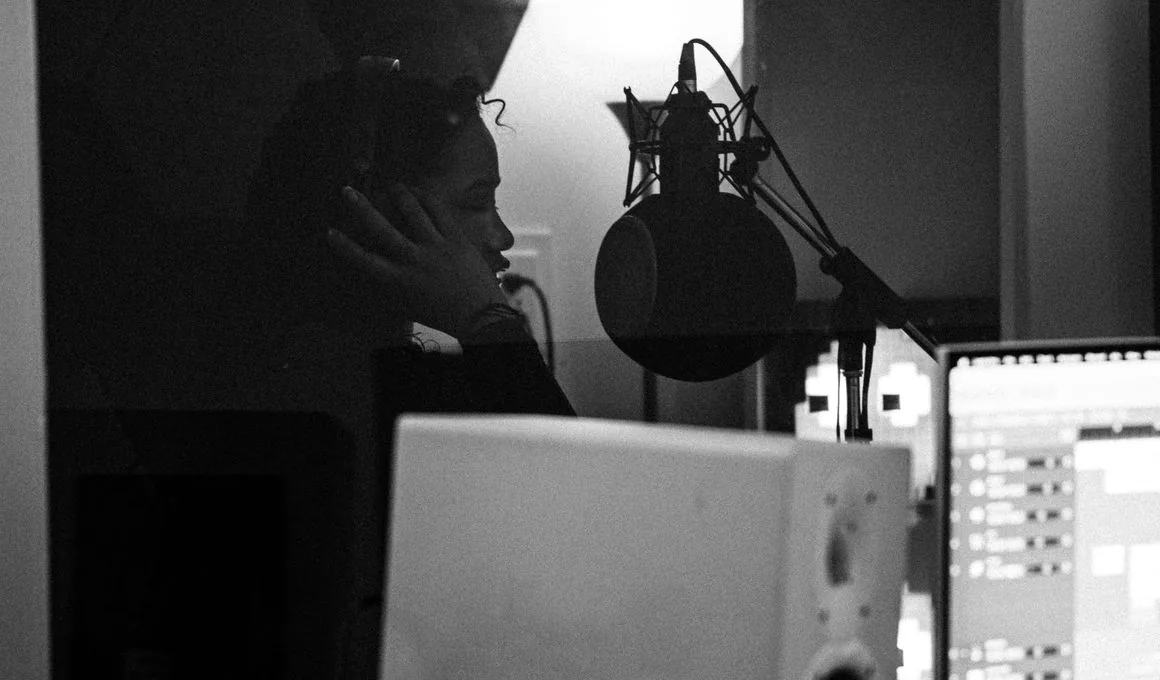
Listen for four failure patterns, then fix the cause
First compare the original and converted phrase without the full arrangement masking defects. Next listen in the mix. A subtle breath artifact may disappear in context, while a changed word can invalidate the take even if the timbre seems impressive.
Use specific observations: “the final consonant at 0:09 is missing” is more useful than “robotic”. If the source is already slurred, re-record it. If only one target voice fails on a sustained note, try a different authorized voice or performance range; no universal setting fixes every voice.
- Pitch instability: compare the same held note in input and output.
- Consonant damage: check short words at phrase boundaries.
- Bleed: listen for pitched fragments of the backing following the vocal.
- Timing: compare the first strong consonant and the final tail against the backing.
Resolve permissions before the upload, not after a claim
A successful conversion does not establish that you may publish someone’s voice or recording. A label saying “AI cover” communicates the technique but does not supply missing permission. Use your own voice or a clearly authorized model for the repeatable example.
Voicestars’ published commercial-use statements are inconsistent; the linked Terms and product FAQ need clarification for a commercial release. Keep permission records and seek advice specific to your intended use when necessary. This article offers a production workflow, not a determination that a particular cover is cleared.
Source: Voicestars Terms and Conditions · checked 31 October 2026.
Recent source: what it changes for this workflow
“find it and request removal”
YouTube expanded likeness-detection access to entertainment-industry participants in April 2026. The announcement specifically describes likeness such as a deepfake face; it should not be rewritten as a claim that every AI vocal is detected. The practical lesson for an AI cover is to avoid implying a real performer’s involvement and resolve permission separately.
Evidence, method and responsibility
Research and interface checks: 31 October 2026. Maintained by Voicestars Editorial under the Nolan Vale pen name. This role is not a claim of an independent qualification or an endorsement by the cited organizations.
- Observed: voice catalogue, personal-voice landing page and training form.
- Recorded: current five-minute minimum and ten-minute recommendation displayed by the training form.
- Prepared: original test lyrics and a repeatable vocal listening protocol.
- Not performed: a personal recording, model training, voice conversion or an audio-quality benchmark. Catalogue marketing claims are not test findings.
We distinguish provider documentation, observed interface behavior and proposed exercises. Screenshots are our actual browser captures; a screenshot of a form does not prove audio quality. No invented measurements, reviewer credentials or user ratings are used.
Report a correction to Voicestars Editorial with the page, date, a short reproducible example and the observed result. Avoid sending private recordings. See our editorial policy.
Frequently asked questions
What do I need for an AI song cover?
An authorized sung performance, an authorized target voice, a backing you may use and an editor for the final mix.
Can I paste lyrics into a cover converter?
Not necessarily. Voice conversion normally needs an audio performance; lyrics-to-song generation is a separate workflow.
Does AI fix an out-of-tune performance?
Do not rely on it. Check the source pitch and timing first, then evaluate the conversion rather than assuming it repairs performance problems.
Why use a dry vocal?
It reduces ambiguity from reverb, doubles and backing bleed. Preserve the dry file even if you add effects in the final mix.
Can I train Voicestars with a ten-second clip?
The observed training form asks for at least five minutes and recommends ten. A short conversion test is different from training material.
Does a celebrity model mean I have permission?
No. Availability in a catalogue is not evidence of the person’s permission, endorsement or clearance for your intended release.
Can I use my own voice?
Voicestars offers a personal-voice training flow. Review its upload requirements, account conditions and data terms before submitting recordings.
How do I spot conversion artifacts?
Compare input and output on held vowels, consonants, breaths and alignment, then listen again in the full mix. Record exact timestamps.
Can I monetize a Voicestars cover?
Do not rely on an unconditional promise. The public product copy and Terms have conflicting commercial-use language, and third-party permissions remain separate. Obtain clarification for your intended use.
Did you generate the example cover?
No. The screenshots document real navigation and the training form; the original lyrics are a proposed controlled test, not a fabricated generated result.
Practical takeaway
A useful AI cover begins with a usable performance and an authorized voice. Prepare the source, test one phrase, fix identifiable defects and review the mix in context. Preserve the settings and permission record alongside the audio.
Sources and verification date
Consulted 31 October 2026. Provider terms and features can change. Research papers describe their own methods and do not certify these products.


