FROM OUR BLOG

FROM OUR BLOG

FROM OUR BLOG

The Symphony of Data: How AI Music Makers Are Revolutionizing the Digital Creator Economy

Dec 15, 2025
computer desk in white minimilistic room


The New Era of Sound: Why Data Matters

The digital landscape is shifting rapidly. Content creation is no longer just about visual aesthetics. Audio has become a critical driver of engagement.

Every TikTok trend or YouTube Short relies heavily on sound. However, the traditional music industry moves slowly. It often struggles to keep pace with the instant demands o the internet.

This is where data steps in. Intelligent algorithms are now analyzing millions of tracks. They identify what makes a melody catchy or a beat rhythmic.

This data-driven approach is birthing a new generation of tools. These tools are not just synthesizers; they are composers. They understand the mathematics behind emotion.

The Creative Bottleneck in Modern Content Creation

Creators face a significant hurdle today. The demand for high-quality content is insatiable. Yet, finding the right background music is a constant struggle.

Copyright strikes can ruin a channel overnight. Stock music libraries can be expensive and generic. Hiring a human composer is often out of the budget for small creators.

The Speed Trap
Speed is currency in the social media world. Waiting days for a track license is not an option. Creators need assets instantly to jump on trending topics.

This creates a "creative bottleneck." The video is ready, but the audio is missing. This friction slows down the entire digital marketing ecosystem.

Unveiling MusicArt: Where Algorithms Meet Melody

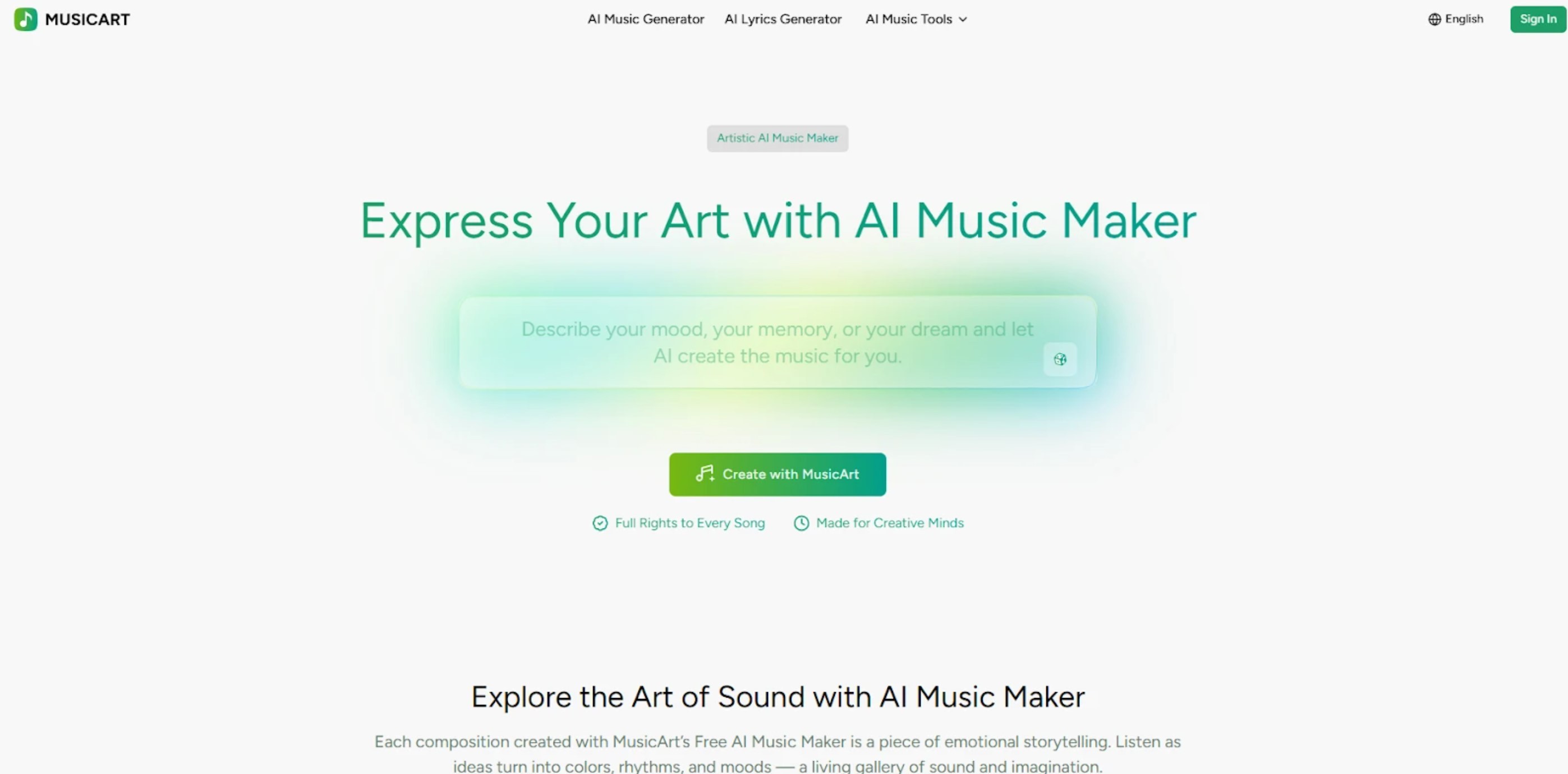
To solve these problems, developers have turned to deep learning. MusicArt represents a prime example of this technological evolution. It functions as a sophisticated AI Music Maker.

It does not simply splice existing loops together. Instead, it utilizes vast datasets of musical structures. It understands genre specificities, from Lo-Fi beats to cinematic scores.

How Data Powers the Engine
The software is built on a foundation of intelligent data processing. It has analyzed the correlation between tempo and user engagement. It knows which chord progressions evoke sadness or excitement.

When a user interacts with MusicArt, they are leveraging this data. The AI predicts the next best note based on probability and music theory. This results in a cohesive and original piece of audio.

The Core Features Analyzed

MusicArt offers a text-to-music capability. This allows users to describe a vibe and receive audio. It bridges the gap between language and sound.

The platform focuses on royalty-free generation. This addresses the legal anxiety creators feel. It democratizes access to professional-sounding audio.

Furthermore, it supports various aspect ratios of sound. You can generate music for different lengths and loops. This flexibility is crucial for varied social media formats.

Navigating the Interface: From Text to Track

Using AI tools has become increasingly intuitive. The barrier to entry is lowering every day. Here is how the process generally works within the MusicArt ecosystem.

Step 1: Inputting the Prompt
The user provides a descriptive text prompt. This could be "energetic pop for a summer vlog." The AI parses the keywords to determine the mood.

Step 2: Parameter Selection
Users can tweak specific settings. You might adjust the duration or the tempo. This gives the user control over the final output's energy.

Step 3: Algorithmic Generation
The AI Music Maker processes the request. It references its training data to construct the track. This process usually takes only a few seconds.

Step 4: Refinement and Export
If the result isn't perfect, users can regenerate. Once satisfied, the track is exported. It is instantly ready for use in editing software.

The Double-Edged Sword: Benefits and Limitations

We must view this technology objectively. AI is a powerful assistant, but it is not flawless. Let’s analyze the pros and cons based on current industry standards.

The Advantages

  1. Efficiency: It reduces production time from days to seconds.

  2. Cost-Effectiveness: It is significantly cheaper than hiring a composer.

  3. Legal Safety: It eliminates the risk of copyright infringement strikes.

  4. Customization: You get a unique track, not a reused stock file.

The Limitations

  1. Emotional Depth: AI sometimes struggles with complex emotional nuance.

  2. Repetition: Some algorithms may rely too heavily on safe patterns.

  3. Human Touch: It lacks the "story" behind a human-composed artist track.

Reshaping the Digital Economy: The Macro View

The impact of AI music goes beyond just making songs. It is reshaping the digital marketing market. Data shows that video content with original audio performs better.

The Rise of "Functional Music"
We are seeing a trend toward "functional music." This is audio designed for specific tasks. Think of study beats, workout tracks, or meditation background noise.

AI excels in this category. It can generate endless streams of consistent background audio. This fuels entire channels on YouTube and Spotify.

Statistics and Market Trends
According to recent creator economy reports, the market size is estimated at over $250 billion. A massive portion of this is video content. Consequently, the demand for royalty-free music is growing at a CAGR (Compound Annual Growth Rate) of over 10%.

Tools like MusicArt are positioning themselves to capture this demand. They enable non-musicians to participate in the music economy. This is a massive shift in the barrier to entry.

Who Stands to Gain the Most? (Ideal Users)

Different sectors can leverage this technology differently. The utility of an AI Music Maker varies by user intent.

Social Media Influencers

They need volume and speed. They post daily on Instagram, TikTok, and YouTube. They need fresh audio that won't get muted.

Game Developers

Indie developers often have limited budgets. AI allows them to generate music for background ambience. This saves their budget for other development costs.

Podcasters and Streamers

They require intro and outro music. They also need "bed" music for talking segments. AI allows them to brand their audio identity uniquely.

Digital Marketers

Ads need to capture attention in the first three seconds. Custom AI music can be tailored to the exact beat of the video edit. This increases retention rates.

Analyzing the Impact on Music Genres

AI does not treat all genres equally. Its training data influences its output capabilities. Currently, electronic and ambient genres are the most successful.

The Electronic Dominance
Genres like EDM, Lo-Fi, and Synthwave are pattern-based. AI thrives on these mathematical structures. It can replicate the drop and the build-up effectively.

The Acoustic Challenge
Replicating a raw acoustic guitar or a human voice is harder. While improving, the "human error" that makes jazz or folk great is difficult to code.

However, tools like MusicArt are constantly updating. As data processing power improves, so does the realism of acoustic instruments.

Final Thought: The Future Harmony of Man and Machine

The integration of AI into music production is inevitable. It is driven by the sheer scale of the digital content market.

We are not replacing human creativity. We are augmenting it. Tools like MusicArt serve as a bridge between data and art.

They allow creators to bypass technical hurdles. This enables them to focus on storytelling. The AI Music Maker is becoming a standard utility in the creator's toolkit.

The Verdict
For those needing quick, legal, and decent quality background audio, AI is the solution. It is a triumph of data science applied to the arts.

As these tools evolve, the line between human and machine composition will blur further. But for now, they offer a pragmatic solution to a digital problem. Embracing this technology is the smart move for the modern digital creator.


import StickyCTA from "https://framer.com/m/StickyCTA-oTce.js@Ywd2H0KGFiYPQhkS5HUJ"


The New Era of Sound: Why Data Matters

The digital landscape is shifting rapidly. Content creation is no longer just about visual aesthetics. Audio has become a critical driver of engagement.

Every TikTok trend or YouTube Short relies heavily on sound. However, the traditional music industry moves slowly. It often struggles to keep pace with the instant demands o the internet.

This is where data steps in. Intelligent algorithms are now analyzing millions of tracks. They identify what makes a melody catchy or a beat rhythmic.

This data-driven approach is birthing a new generation of tools. These tools are not just synthesizers; they are composers. They understand the mathematics behind emotion.

The Creative Bottleneck in Modern Content Creation

Creators face a significant hurdle today. The demand for high-quality content is insatiable. Yet, finding the right background music is a constant struggle.

Copyright strikes can ruin a channel overnight. Stock music libraries can be expensive and generic. Hiring a human composer is often out of the budget for small creators.

The Speed Trap
Speed is currency in the social media world. Waiting days for a track license is not an option. Creators need assets instantly to jump on trending topics.

This creates a "creative bottleneck." The video is ready, but the audio is missing. This friction slows down the entire digital marketing ecosystem.

Unveiling MusicArt: Where Algorithms Meet Melody

To solve these problems, developers have turned to deep learning. MusicArt represents a prime example of this technological evolution. It functions as a sophisticated AI Music Maker.

It does not simply splice existing loops together. Instead, it utilizes vast datasets of musical structures. It understands genre specificities, from Lo-Fi beats to cinematic scores.

How Data Powers the Engine
The software is built on a foundation of intelligent data processing. It has analyzed the correlation between tempo and user engagement. It knows which chord progressions evoke sadness or excitement.

When a user interacts with MusicArt, they are leveraging this data. The AI predicts the next best note based on probability and music theory. This results in a cohesive and original piece of audio.

The Core Features Analyzed

MusicArt offers a text-to-music capability. This allows users to describe a vibe and receive audio. It bridges the gap between language and sound.

The platform focuses on royalty-free generation. This addresses the legal anxiety creators feel. It democratizes access to professional-sounding audio.

Furthermore, it supports various aspect ratios of sound. You can generate music for different lengths and loops. This flexibility is crucial for varied social media formats.

Navigating the Interface: From Text to Track

Using AI tools has become increasingly intuitive. The barrier to entry is lowering every day. Here is how the process generally works within the MusicArt ecosystem.

Step 1: Inputting the Prompt
The user provides a descriptive text prompt. This could be "energetic pop for a summer vlog." The AI parses the keywords to determine the mood.

Step 2: Parameter Selection
Users can tweak specific settings. You might adjust the duration or the tempo. This gives the user control over the final output's energy.

Step 3: Algorithmic Generation
The AI Music Maker processes the request. It references its training data to construct the track. This process usually takes only a few seconds.

Step 4: Refinement and Export
If the result isn't perfect, users can regenerate. Once satisfied, the track is exported. It is instantly ready for use in editing software.

The Double-Edged Sword: Benefits and Limitations

We must view this technology objectively. AI is a powerful assistant, but it is not flawless. Let’s analyze the pros and cons based on current industry standards.

The Advantages

  1. Efficiency: It reduces production time from days to seconds.

  2. Cost-Effectiveness: It is significantly cheaper than hiring a composer.

  3. Legal Safety: It eliminates the risk of copyright infringement strikes.

  4. Customization: You get a unique track, not a reused stock file.

The Limitations

  1. Emotional Depth: AI sometimes struggles with complex emotional nuance.

  2. Repetition: Some algorithms may rely too heavily on safe patterns.

  3. Human Touch: It lacks the "story" behind a human-composed artist track.

Reshaping the Digital Economy: The Macro View

The impact of AI music goes beyond just making songs. It is reshaping the digital marketing market. Data shows that video content with original audio performs better.

The Rise of "Functional Music"
We are seeing a trend toward "functional music." This is audio designed for specific tasks. Think of study beats, workout tracks, or meditation background noise.

AI excels in this category. It can generate endless streams of consistent background audio. This fuels entire channels on YouTube and Spotify.

Statistics and Market Trends
According to recent creator economy reports, the market size is estimated at over $250 billion. A massive portion of this is video content. Consequently, the demand for royalty-free music is growing at a CAGR (Compound Annual Growth Rate) of over 10%.

Tools like MusicArt are positioning themselves to capture this demand. They enable non-musicians to participate in the music economy. This is a massive shift in the barrier to entry.

Who Stands to Gain the Most? (Ideal Users)

Different sectors can leverage this technology differently. The utility of an AI Music Maker varies by user intent.

Social Media Influencers

They need volume and speed. They post daily on Instagram, TikTok, and YouTube. They need fresh audio that won't get muted.

Game Developers

Indie developers often have limited budgets. AI allows them to generate music for background ambience. This saves their budget for other development costs.

Podcasters and Streamers

They require intro and outro music. They also need "bed" music for talking segments. AI allows them to brand their audio identity uniquely.

Digital Marketers

Ads need to capture attention in the first three seconds. Custom AI music can be tailored to the exact beat of the video edit. This increases retention rates.

Analyzing the Impact on Music Genres

AI does not treat all genres equally. Its training data influences its output capabilities. Currently, electronic and ambient genres are the most successful.

The Electronic Dominance
Genres like EDM, Lo-Fi, and Synthwave are pattern-based. AI thrives on these mathematical structures. It can replicate the drop and the build-up effectively.

The Acoustic Challenge
Replicating a raw acoustic guitar or a human voice is harder. While improving, the "human error" that makes jazz or folk great is difficult to code.

However, tools like MusicArt are constantly updating. As data processing power improves, so does the realism of acoustic instruments.

Final Thought: The Future Harmony of Man and Machine

The integration of AI into music production is inevitable. It is driven by the sheer scale of the digital content market.

We are not replacing human creativity. We are augmenting it. Tools like MusicArt serve as a bridge between data and art.

They allow creators to bypass technical hurdles. This enables them to focus on storytelling. The AI Music Maker is becoming a standard utility in the creator's toolkit.

The Verdict
For those needing quick, legal, and decent quality background audio, AI is the solution. It is a triumph of data science applied to the arts.

As these tools evolve, the line between human and machine composition will blur further. But for now, they offer a pragmatic solution to a digital problem. Embracing this technology is the smart move for the modern digital creator.


import StickyCTA from "https://framer.com/m/StickyCTA-oTce.js@Ywd2H0KGFiYPQhkS5HUJ"

import StickyCTA from "https://framer.com/m/StickyCTA-oTce.js@Ywd2H0KGFiYPQhkS5HUJ"

Create a free website with Framer, the website builder loved by startups, designers and agencies.