
FROM OUR BLOG
How Premade Cheer Music Is Reshaping Competitive Performance
Jun 8, 2026
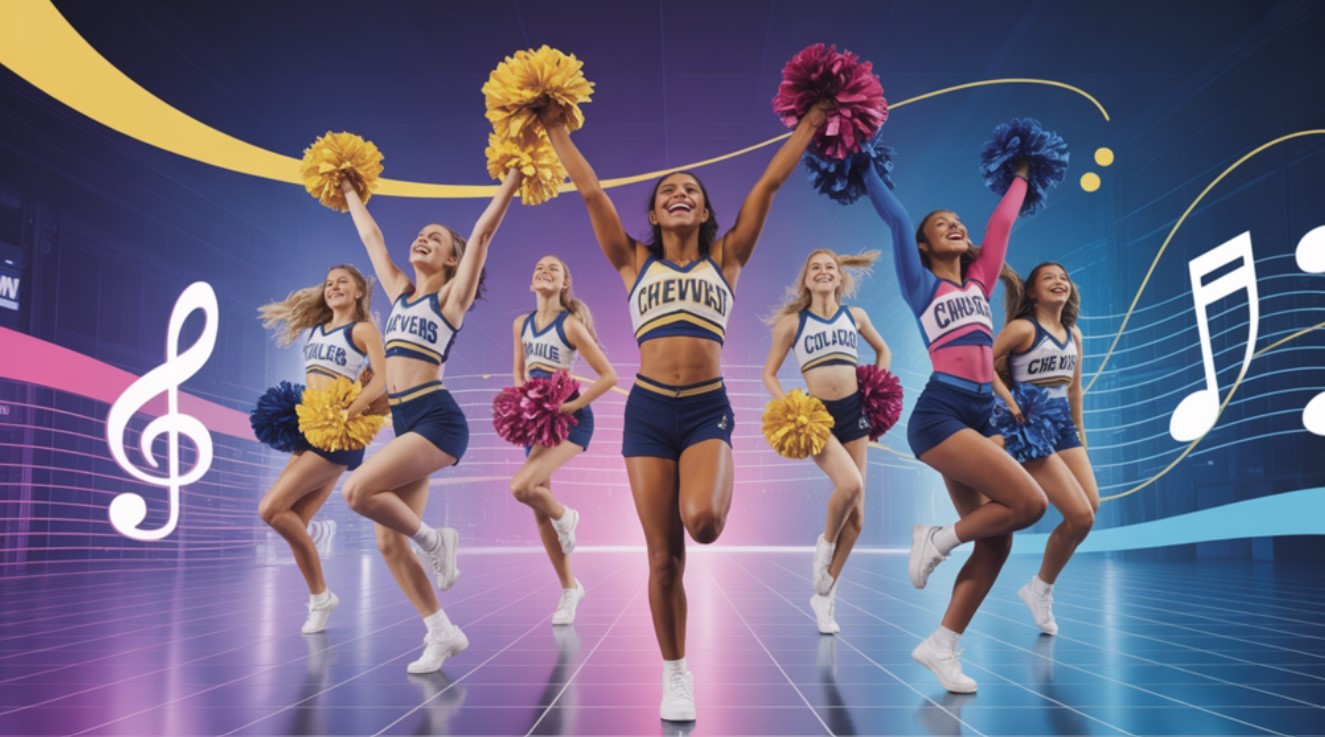
This shift reflects broader changes in how athletic performance and entertainment intersect. As cheerleading has professionalized—with stricter judging criteria, higher-stakes competitions, and increasingly complex choreography—the demand for reliable, high-quality music has intensified. Premade tracks offer teams a solution that balances professional production standards with practical constraints, allowing coaches to focus resources on what happens on the mat rather than in the studio.
From Chants to Complex Soundscapes
Cheerleading music has traveled a long road from its origins. In the early decades, routines relied on live chants, clapping rhythms, and minimal instrumentation. The introduction of recorded music in the 1970s opened new possibilities, but it wasn't until the 1980s that cheerleading began incorporating mainstream pop and rock tracks into performances.
According to research on music's role in athletic performance, the right soundtrack can significantly enhance focus, motivation, and energy levels—factors that proved transformative for cheerleading. By the 2000s, digital audio workstations made it possible to create intricate mixes featuring multiple genres, sound effects, voiceovers, and precisely timed transitions.
Modern cheer music often layers hip-hop beats with pop hooks, EDM buildups, and custom vocal tracks. This level of complexity often requires specialized expertise that many teams do not have available internally. Companies such as Cheerleading Mix have responded by providing professionally produced tracks designed to meet competition requirements while remaining accessible to programs of varying sizes and budgets. Comparable providers like CheerSounds Music and Powerhouse Mixes also create competition-ready music and custom mixes tailored to the needs of cheer teams and performance programs.
Why Teams Are Turning to Premade Tracks
The advantages of premade cheer music extend beyond simple convenience. For competitive teams operating under tight budgets and timelines, these tracks solve several persistent challenges:
Production Quality: Professional mixing, mastering, and sound design ensure consistent audio quality across different venue sound systems—a critical factor when judges evaluate synchronization and presentation.
Time Efficiency: Custom music production can consume weeks of back-and-forth revisions. Premade tracks allow teams to audition multiple options quickly and begin choreography immediately.
Cost Control: Custom mixes from specialized producers often cost hundreds or thousands of dollars. Premade options provide professional-grade audio at a fraction of the price, making quality music accessible to smaller programs.
Legal Compliance: Reputable premade music providers handle licensing and copyright clearances, eliminating the risk of disqualification due to unauthorized music use—a growing concern as music licensing enforcement has intensified.
Variety and Flexibility: Extensive catalogs allow teams to find tracks that match their specific style, skill level, and routine theme without commissioning custom work.
The Competitive Edge: Music and Scoring
In high-level cheerleading competitions, music accounts for a measurable portion of overall scoring. Judges evaluate how well routines synchronize with musical elements, whether transitions feel seamless, and how effectively the soundtrack enhances the performance's energy and impact.
Teams using premade tracks designed specifically for competition benefit from several structural advantages. These mixes typically feature clear eight-counts that align with standard cheerleading choreography, strategic tempo changes that accommodate different skill sections, and audio cues that help athletes maintain timing under pressure.
The consistency of premade music also reduces technical risk. Custom mixes sometimes suffer from uneven volume levels, abrupt transitions, or audio artifacts that become apparent only when played through competition sound systems. Professional premade tracks undergo extensive testing and refinement, minimizing the chance of audio issues during critical performances.
According to research on music and athletic performance, rhythmic auditory stimulation can improve movement coordination and timing precision—exactly what cheerleading routines demand. Teams that select music strategically can leverage these effects to sharpen execution and boost confidence.
Current Trends Shaping Cheer Music Selection
The cheer music landscape continues to evolve, influenced by broader entertainment trends and technological advances. Several patterns have emerged in recent seasons:
Genre Blending: Top routines increasingly mix hip-hop, pop, EDM, and even orchestral elements within a single track, creating dynamic soundscapes that maintain audience engagement throughout two-and-a-half-minute performances.
Narrative Arcs: Rather than simply stringing together high-energy segments, many teams now select music that tells a story or builds toward a climactic moment, adding emotional depth to technical execution.
Vocal Integration: Custom voiceovers, chants, and crowd noise have become standard elements, helping routines feel more interactive and energetic.
Tempo Variation: Strategic use of tempo changes—building from moderate energy openings to explosive finishes—helps routines feel more sophisticated and allows teams to showcase different skill sets.
Cultural Influences: Latin rhythms, K-pop elements, and global music trends are appearing more frequently, reflecting cheerleading's international growth and diverse participant base.
These trends require production expertise that most teams cannot develop internally, further driving demand for professionally created premade options that incorporate current stylistic elements.
Making the Right Music Choice
Selecting appropriate music remains one of the most consequential decisions teams make each season. The right track can elevate a good routine into a memorable performance; the wrong choice can undermine months of preparation.
When evaluating premade options, successful teams consider several factors beyond simple personal preference. The music must match the team's skill level—overly complex tracks can expose timing weaknesses, while simplistic choices may fail to showcase advanced abilities. The energy curve should align with choreographic structure, building intensity at strategic moments rather than maintaining constant high energy that becomes monotonous.
Theme and style coherence matter as well. A routine built around a specific concept—whether athletic, theatrical, or narrative—requires music that reinforces rather than contradicts that vision. Teams also consider how their music choice positions them relative to competitors, seeking tracks that feel current and fresh without chasing trends so aggressively that the music dates quickly.
Practical considerations include audio quality, proper licensing documentation, and compatibility with competition sound systems. Reputable premade music providers address these technical requirements, but teams should verify that tracks meet their specific competition's regulations regarding length, content restrictions, and format specifications.
Implementation Strategies
Successfully integrating premade music into a competitive routine requires more than simply selecting a track and choreographing to it. The most effective approach involves several deliberate steps:
Early Selection: Choosing music before choreography begins allows coaches to build routines that maximize the track's natural energy and structure rather than forcing choreography to fit music selected later.
Detailed Analysis: Breaking down the track into eight-counts, identifying transition points, and mapping energy levels helps choreographers use the music strategically.
Athlete Input: Involving team members in music selection can boost buy-in and motivation, though final decisions should balance preference with strategic considerations.
Testing and Adjustment: Running routines with the music in various practice settings—different rooms, sound systems, and conditions—reveals potential issues before competition day.
Backup Preparation: Maintaining properly formatted backup copies and knowing exactly how to communicate audio requirements to competition staff prevents technical disasters.
The Future of Cheer Music
As cheerleading continues evolving as both sport and entertainment, music will remain central to how teams compete and connect with audiences. Premade options are likely to become even more sophisticated, with providers offering greater customization within standardized frameworks—perhaps allowing teams to select from modular components or adjust certain elements while maintaining professional production quality.
Technology may also enable more interactive possibilities. Some producers are experimenting with adaptive music that can adjust to live performance variations, though such innovations remain largely theoretical for competitive cheerleading's current format.
What seems certain is that the gap between custom and premade music will continue narrowing. As premade catalogs expand and production quality improves, fewer teams will find sufficient advantage in custom work to justify the additional cost and complexity. This democratization of high-quality cheer music allows programs to compete more equitably, shifting competitive advantage back toward coaching, training, and execution—the elements that have always defined cheerleading excellence.
For teams ready to explore how professional premade music can enhance their competitive performance, the current landscape offers unprecedented options. The key lies in approaching music selection with the same strategic rigor applied to choreography, training, and team development—recognizing that in modern competitive cheerleading, the soundtrack isn't just background noise but a fundamental component of success.


import StickyCTA from "https://framer.com/m/StickyCTA-oTce.js@Ywd2H0KGFiYPQhkS5HUJ"