
FROM OUR BLOG
How AI Voice Models Are Changing the Way Creators Work With Audio
Jan 26, 2026

Photo by Soundtrap on Unsplash
Advances in artificial intelligence are reshaping many creative disciplines, and audio production is one of the most visible areas of change. From podcasting and video narration to immersive media and accessibility tools, synthetic voices are becoming more capable, expressive, and easy to integrate into diverse workflows. Among the tools driving this shift, references to ElevenLabs voice appear frequently in discussions about the latest developments, not because any single system is definitive, but because the evolution of voice models illustrates broader trends that are empowering creators to think differently about sound and storytelling.
Understanding how AI voice models are influencing creative workflows involves looking beyond novelty to the underlying mechanics, possibilities, and implications of generating human-like speech from text. In many cases, these systems are not just substituting for human voice; they are expanding what creators can imagine and build, while also raising questions about quality, authenticity, and ethical use.
The Technical Leap Toward Naturalism
The earliest text-to-speech systems produced functional but synthetic results: clear enough to be understood, but monotonous and disposable in contexts where emotional nuance mattered. Over the past decade, advancements in deep learning, particularly neural network architectures that model sound at fine granularity, have bridged much of the gap between artificial and human voice.
Recent voice synthesis models capture prosody, rhythm, and intonation in ways that feel familiar rather than robotic. These systems draw on large datasets of recorded speech to learn patterns of emphasis, pauses, and dynamics, enabling generated audio to convey not just words but subtle emotional cues. For creators, this means that synthetic voice is no longer confined to utility tasks like menu prompts and accessibility aids; it can support much richer narrative and stylistic ambitions.
Democratizing Access to Quality Voice
One of the most immediate impacts of AI voice models is democratization. High-quality voice work historically required access to recording equipment, studio space, and trained performers. These constraints limited opportunities for independent creators, small teams, and solo practitioners. Today, AI generators produce broadcast-ready voice output with only a text prompt and a few parameter choices.
This shift allows creators to prototype ideas rapidly, test multiple voice styles, and localize content across languages without scheduling studio time. It can reduce cost barriers for emerging voices in podcasting, education, and interactive media, enabling more diverse perspectives to find expression.
New Forms of Audio Production
Beyond replacing spoken narration, AI voice models are inspiring new forms of audio creation. For example, creators can programmatically generate variations of delivery to match context, audience, or character. In interactive narratives or game environments, dynamic voice responses can adapt to player choices in real time, opening doors to more responsive and engaging storytelling.
Voice models can also support workflows that blend human and synthetic elements. Editors may create a base narration using AI and then refine it with human tones, or they might augment existing recordings where gaps or retakes are needed. The flexibility of modern systems encourages experimentation that was previously impractical.
Accessibility and Inclusivity
Synthesized voice has long played a role in accessibility, enabling screen readers and auditory interfaces for people with visual or motor impairments. As these models become more natural and expressive, they can enhance the experience of content consumption for a broader audience. Clear, well-modulated synthetic speech can reduce listening fatigue and improve comprehension, especially when paired with pacing and tone that aligns with user preference.
Organizations focused on inclusive technology design emphasize the importance of choice and customization in accessibility tools. Allowing users to select from a range of voices, languages, and speaking styles, including those generated by AI, supports a more personalized and empowering experience.
Quality and Perception in Creative Contexts
The increasing realism of AI voice models prompts reflection on how listeners perceive synthetic audio. When a voice sounds convincingly human, audiences may respond emotionally in ways similar to their reaction to human narration. This can enhance engagement, but it also raises questions about authenticity and trust.
Studies in psychology suggest that people form impressions of speakers based on tone, rhythm, and expressiveness. When a synthetic voice carries emotional weight, listeners may attribute intent and character to it. Creators need to be mindful of how voice choices influence interpretation, and whether synthetic speech aligns with the goals of their material.
Ethical and Legal Considerations
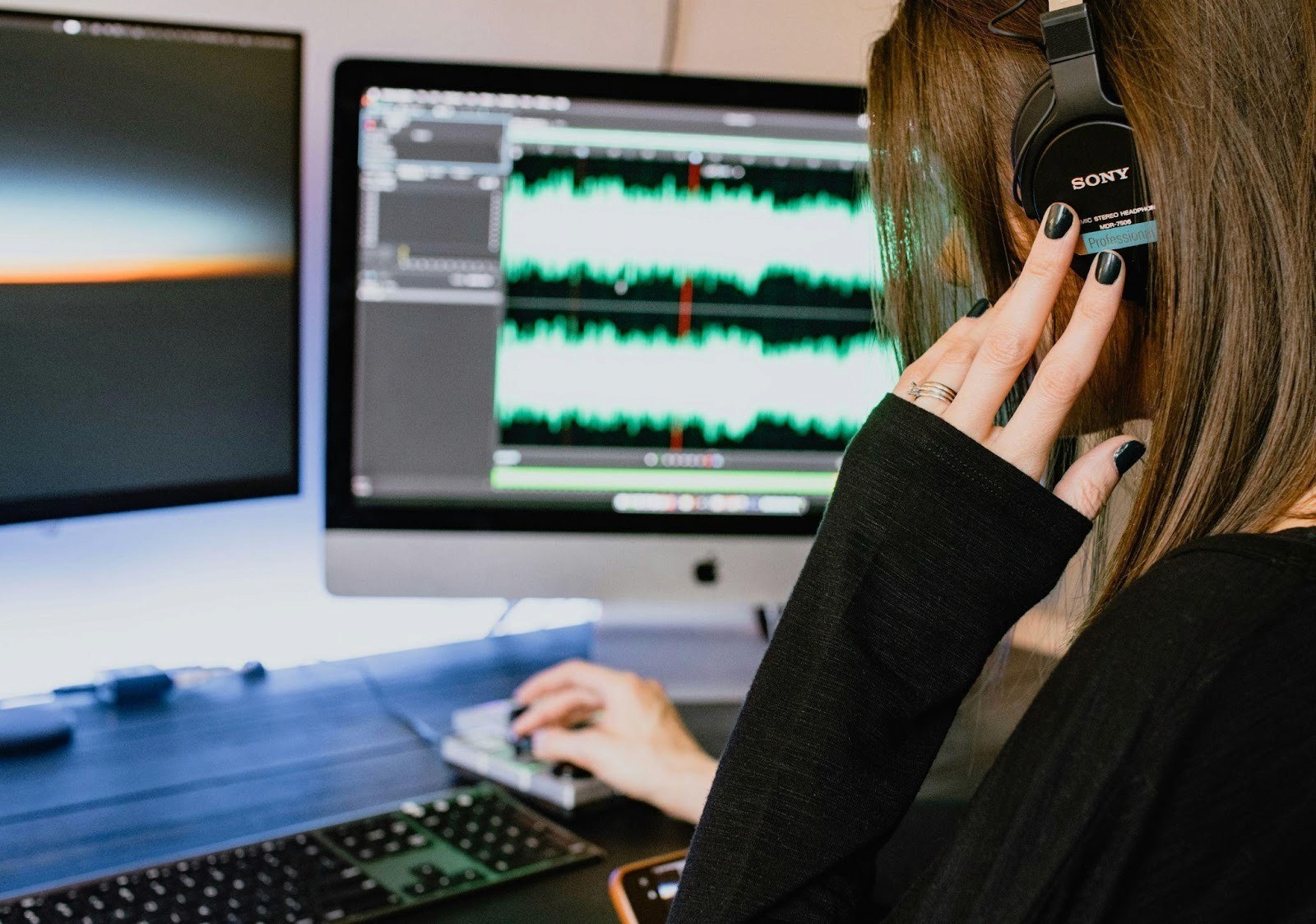
Photo by Kelly Sikkema on Unsplash
As voice models improve, ethical considerations become increasingly important. Generating speech that mimics specific individuals, or that could be mistaken for human performance without disclosure, poses challenges related to consent and representation. There are ongoing discussions in creative and regulatory communities about best practices for transparency when synthetic voices are used in public-facing content.
Legal frameworks, including copyright and likeness rights, are still evolving. Some jurisdictions are exploring how to protect individuals’ vocal likenesses, while others consider standards for labeling synthetic voice content to inform listeners. Creators who engage with these technologies should stay informed about the shifting landscape and consider ethical guidelines in their workflows.
Supporting Diverse Languages and Styles
Another area where AI voice models are expanding possibilities is linguistic diversity. Many early systems were limited to a handful of widely spoken languages, but newer models support a broader range of languages, dialects, and accents. This inclusivity enables creators to reach global audiences and to produce localized content without extensive resource investment.
However, quality can vary across languages depending on the availability and quality of training data. Academia and industry alike emphasize the importance of inclusive datasets to ensure that voice models perform well across linguistic contexts. This is a technical challenge with cultural and ethical dimensions.
The Role of Human Creativity
Despite the power of AI voice models, human creativity remains central. Text-to-speech systems generate audio based on patterns learned from data, but decisions about script, pacing, context, and emotion are inherently human. The most compelling uses of synthetic voice often emerge when creators intentionally shape how voice interacts with other elements, music, sound design, narrative structure.
Moreover, human performers bring qualities such as improvisation, subtle emotional shifts, and interpretive nuance that current models cannot fully replicate. Many creators view AI as an augmentation of human capability rather than a replacement.
Practical Adoption in Workflows
Integrating voice models into creative workflows involves both technical and organizational considerations. Developers and producers need tools that support iteration, version control, and quality testing. Systems that allow easy adjustment of tone, pacing, and emphasis reduce friction and support refinement.
Platforms that offer API access, customizable voices, and export formats compatible with editing environments help creators embed synthetic speech into broader production pipelines. As these tools evolve, interoperability and user experience become key differentiators for adoption.
Future Directions
Looking ahead, voice generation will likely continue to improve in expressiveness, multilingual performance, and contextual adaptation. Research is exploring ways to make models more responsive to emotional cues or to generate voices that evolve over the course of a narrative. There is also interest in personalization, allowing users to shape voices that reflect unique identity profiles or storytelling needs.
These developments point to a future where synthetic voice is not just a convenience, but a flexible, expressive medium in its own right.


import StickyCTA from "https://framer.com/m/StickyCTA-oTce.js@Ywd2H0KGFiYPQhkS5HUJ"